1. Bugatti Veyron Super Sport: 267 mph2. Hennessey Venom GT: 260 mph2. Koenigsegg Agera R: 260 mph3. SSC Ultimate Aero: 257 mph4. Saleen S7 Twin-Turbo: 248 mph5. Koenigsegg CCX: 245 mph6. McLaren F1: 240 mph7. Gumpert Apollo: 224 mph8. Noble M600: 223 mph9. Lamborghini Aventador: 217 mph9. Pagani Zonda Cinque Roadster: 217 mph9. Ferrari Enzo: 217 mph9. Jaguar XJ220: 217 mph10. Ascari A10: 215 mph10. Pagani Zonda F: 215 mph
Sunday, November 6, 2011

2011 Hennessey Venom GT
Hennessey Performance Engineering is tops in modifying engines. They can take an ultra sleek super automobile, and push it towards perfection. With Hennessey you can experience the best of the best.
At first glance, the Venom GT looks like the Lotus Exige. The Venom is an explosive fusion of British flair and American power. The 2011 Hennessey Venom GT received a make-over.

Performance
The exterior design looks like it comes out of Bruce Wayne’s or Tony Starks garage, but the car’s road power makes it a superhero in itself. The Hennessey Venom GT has for an engine a 6.2-liter LS9 twin-turbo V-8, similar to the engine on the Chevrolet Corvette ZR1 one of the fastest production cars released. Airflow management was initially done on CAD. They used it to simulate airflow to improve the engine and body design.
The hood of the car cannot be accessed, although it contains two radiators with fans that help maintain the engine cool. Hennessey stresses the idea that the cooler the engine, the more horsepower you get. The car is offered in a mid-engine rear drive power-train with horsepower ranging from 725 to 1200. The drive train is provided by a Ricardo 6 speed transmission. The shifter is patterned after the Lotus, but upcoming models will see a switch to the Ford GT styled shifter.
Rumors abound that the Hennessey Venom GT has either tied or broken the record of the Bugatti Veyron Super Sports record of 267 mph. We have yet to hear from reliable sources to make the record official.
Exterior & Interior
The size of the Venom GT is smidge bigger than the Lotus Exige. The Hennessey Venom GT retains the Exige’s lightweight stylings. The carbon fiber material used on the Venom GT contributes to its lightweight physique. The math is easy: less weight is equivalent to better performance. Founder John Hennessey said that what he wanted to make was a car that all about performance, he didn’t want to worry about interior styling’s. Most of the cars weight is the engine. The Hennessey Venom GT was built from scratch putting in the best components from brains to brawn of American engineering.
The adjustable rear wing provides added aerodynamic performance when needed. The body is built to withstand force produced by vehicles that produce 1500 horsepower or more. The wheels are equipped with brake calipers made by Brembo which provide excellent traction control. Test drivers have commented that the chassis is rigid but firm, making the ride smooth and easy on the body. The smooth response of the Venom after making turns make the transition easy on both the vehicle and driver, it just helps prove it to be just as advertised, a supercar.
 Currently, the new Venom GT has yet to be given permission to be driven on US streets and highways. Most of the testing and showing of this car have been across the pond in the UK.
The simplicity of the interior is just that, it contains the necessary instrumentation accessories to ride the Venom GT with confidence. The Venom has a built-in roll cage providing protection to both driver and passenger. Alcantara leather lines the inside of this supercar, from the panels, seating, and the steering wheel. Giving it a more than a muscle car look. It does have AC, AM/FM radio, and yes even a docking station for those with iPods. An added feature is the removable steering wheel to aid taller folks easier access getting in and out of the car.
The Competition
The Hennessey Venom GT has few peers, some try to come close but few do. During a “shoot-out” in 2007 to find out who reached the 200 mph barrier the fastest, the predecessor of this current Venom, the Hennessey Venom 1000 twin turbo found itself stacked up against the Bugatti Veyron 16.4, Lamborghini Murcielago, Corvette Lingenfelter, the Mercedes Benz SLR McLaren, and the Ruft RT12. Only four vehicles made the final attempt, and the Hennessey Venom 1000 had the best record at 20.3 seconds in reaching the 200 mph mark, followed by the Veyron at 24.2 seconds, then the Lingenfelter Corvette at 26.5 seconds, and finally the Ruft Rt12 at 35.5.
The 2011 Hennessey Venom GT with 725 horsepower is priced considerably less than the 1,200HP version. Total production of the car is limited to 29, with only 10 units made per year. For 2012, only 5 vehicles will be made, they require a lead time of six months to build one unit.
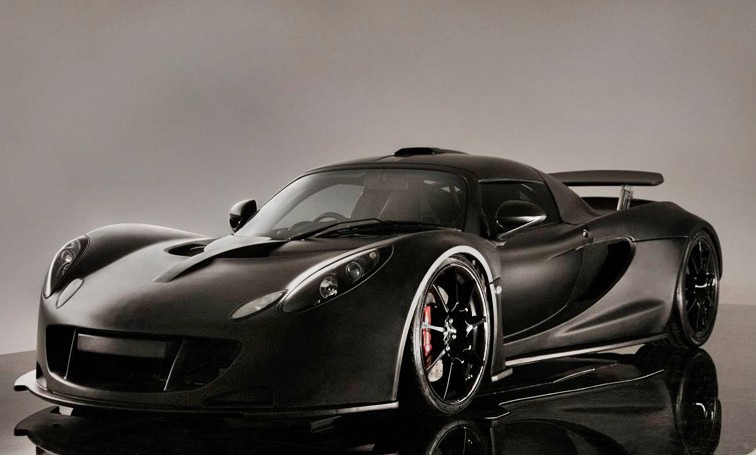
At first glance, the Venom GT looks like the Lotus Exige. The Venom is an explosive fusion of British flair and American power. The 2011 Hennessey Venom GT received a make-over.
Performance
The exterior design looks like it comes out of Bruce Wayne’s or Tony Starks garage, but the car’s road power makes it a superhero in itself. The Hennessey Venom GT has for an engine a 6.2-liter LS9 twin-turbo V-8, similar to the engine on the Chevrolet Corvette ZR1 one of the fastest production cars released. Airflow management was initially done on CAD. They used it to simulate airflow to improve the engine and body design.
The hood of the car cannot be accessed, although it contains two radiators with fans that help maintain the engine cool. Hennessey stresses the idea that the cooler the engine, the more horsepower you get. The car is offered in a mid-engine rear drive power-train with horsepower ranging from 725 to 1200. The drive train is provided by a Ricardo 6 speed transmission. The shifter is patterned after the Lotus, but upcoming models will see a switch to the Ford GT styled shifter.
Rumors abound that the Hennessey Venom GT has either tied or broken the record of the Bugatti Veyron Super Sports record of 267 mph. We have yet to hear from reliable sources to make the record official.
Exterior & Interior
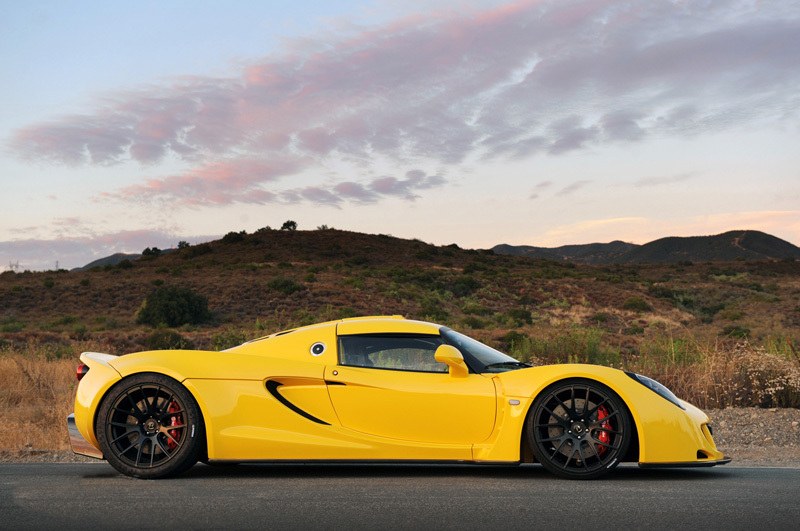
The size of the Venom GT is smidge bigger than the Lotus Exige. The Hennessey Venom GT retains the Exige’s lightweight stylings. The carbon fiber material used on the Venom GT contributes to its lightweight physique. The math is easy: less weight is equivalent to better performance. Founder John Hennessey said that what he wanted to make was a car that all about performance, he didn’t want to worry about interior styling’s. Most of the cars weight is the engine. The Hennessey Venom GT was built from scratch putting in the best components from brains to brawn of American engineering.
The adjustable rear wing provides added aerodynamic performance when needed. The body is built to withstand force produced by vehicles that produce 1500 horsepower or more. The wheels are equipped with brake calipers made by Brembo which provide excellent traction control. Test drivers have commented that the chassis is rigid but firm, making the ride smooth and easy on the body. The smooth response of the Venom after making turns make the transition easy on both the vehicle and driver, it just helps prove it to be just as advertised, a supercar.
 Currently, the new Venom GT has yet to be given permission to be driven on US streets and highways. Most of the testing and showing of this car have been across the pond in the UK.
The simplicity of the interior is just that, it contains the necessary instrumentation accessories to ride the Venom GT with confidence. The Venom has a built-in roll cage providing protection to both driver and passenger. Alcantara leather lines the inside of this supercar, from the panels, seating, and the steering wheel. Giving it a more than a muscle car look. It does have AC, AM/FM radio, and yes even a docking station for those with iPods. An added feature is the removable steering wheel to aid taller folks easier access getting in and out of the car.
The Competition
The Hennessey Venom GT has few peers, some try to come close but few do. During a “shoot-out” in 2007 to find out who reached the 200 mph barrier the fastest, the predecessor of this current Venom, the Hennessey Venom 1000 twin turbo found itself stacked up against the Bugatti Veyron 16.4, Lamborghini Murcielago, Corvette Lingenfelter, the Mercedes Benz SLR McLaren, and the Ruft RT12. Only four vehicles made the final attempt, and the Hennessey Venom 1000 had the best record at 20.3 seconds in reaching the 200 mph mark, followed by the Veyron at 24.2 seconds, then the Lingenfelter Corvette at 26.5 seconds, and finally the Ruft Rt12 at 35.5.
The 2011 Hennessey Venom GT with 725 horsepower is priced considerably less than the 1,200HP version. Total production of the car is limited to 29, with only 10 units made per year. For 2012, only 5 vehicles will be made, they require a lead time of six months to build one unit.
2011 Koenigsegg Agera R
It is common knowledge that Koenigsegg makes some of the fastest supercars around. And the latest import from Sweden, the 2011 Koenigsegg Agera R is no exception.
Just how fast is this exotic two-door hyper-machine? Well, suffice it to say that the Agera R is hot on the Bugatti Veyron Super Sport’s tail clocking in at a blisteringly fast 0-168 mph in just 14.53 seconds. Although not yet completely verified, this performance proves that it won’t be long before Koenigsegg overtakes Bugatti and claim for itself the title of being the world’s fastest supercar.

This new car which only debuted at the Geneva Motor Show is so hot that the Royal Family of Oman snatched one up even before it was revealed at the said show. If this is any indication of the kind of future the Agera R will have in the world of supercars, then surely the renowned Bugatti Veyron Super Sport may soon relinquish its throne in favor of the Agera R.
So what makes the Koenigsegg Agera R sizzle?
Performance
Powering the Agera R is a Koenigsegg-developed 5.0L V8 Twin Turbo engine. This robust behemoth generates a mind-blowing 1,115hp at 6,900 rpm all the way to 7,250 rpm. All this power is coupled with an impressive 885lb-ft of torque at 4100rpm. All this impeccable figures translates to a demonic 0-60mph acceleration of just 2.9 seconds!
And the wonders of this car do not stop at the engine specifications alone.
For instance, the Agera R can run on multiple fuel types such as E85 and E100 bio-fuels, as well as regular 95 octane gas. The bio-fuels gives the car maximum horsepower as power output is reduced by about 100hp and 100lb-ft torque when regular fuel is used. Still, that feature is quite surprising by any standards.
Another note-worthy feature of the car is its suspension system. Koenigsegg names it the Triplex rear suspension. This ingenious suspension set up connects a shock absorber and coil spring to each rear wheel. This configuration enables the car to be raised or lowered on demand because each wheel can affect the other as the extra spring partners in series with the normal suspension and dampers to achieve the desired height.
The Agera R is such a unique and powerful supercar that Koenigsegg had to design the wheels and tires specifically for it. The geniuses at Koenigsegg made wheels that act as air-turbines to keep the brakes cool. The tires were made by Michelin specifically for the Agera R to slay the Veyron SS as each tire is capable of reaching 261 mph.

Exterior & Interior
If the beast that powers the Agera R is not enough to make your heart goes racing, then surely its interior and jaw-dropping exterior surely will. Let’s start with the car’s over-all look. The Agera R as shown at the Geneva show reminds one of a cross between the Lotus driven by James Bond as he cruised the Swiss Alps and another movie icon, Speed Racer.
The Agera R is equipped with an intelligently designed and dynamic rear wing. Unlike other wings that lift automatically at high speeds, the Agera R’s wing uses the wind pressure created at high speed to force the wing downward to create wind resistance. Through this, Koenigsegg was able to come up with a smarter and lighter wing that instantly compensates for headwind or tailwind.
Luxury is paramount at the Agera R’s interiors. Satnav, MP3/USB compatibility, climate control, plush leather etc. and more come standard on the Agera R. Quite notable though is its “Top Speed” mode accessible via the infotainment system. Although not a separate key as what is found in the Bugatti, it still provides the driver direct access to unlock the true potential of the Agera R.
You like the Agera R, don’t you? If you have $1.9M to spare, you can have one of the best rides of your life.
Just how fast is this exotic two-door hyper-machine? Well, suffice it to say that the Agera R is hot on the Bugatti Veyron Super Sport’s tail clocking in at a blisteringly fast 0-168 mph in just 14.53 seconds. Although not yet completely verified, this performance proves that it won’t be long before Koenigsegg overtakes Bugatti and claim for itself the title of being the world’s fastest supercar.

This new car which only debuted at the Geneva Motor Show is so hot that the Royal Family of Oman snatched one up even before it was revealed at the said show. If this is any indication of the kind of future the Agera R will have in the world of supercars, then surely the renowned Bugatti Veyron Super Sport may soon relinquish its throne in favor of the Agera R.
So what makes the Koenigsegg Agera R sizzle?
Performance
Powering the Agera R is a Koenigsegg-developed 5.0L V8 Twin Turbo engine. This robust behemoth generates a mind-blowing 1,115hp at 6,900 rpm all the way to 7,250 rpm. All this power is coupled with an impressive 885lb-ft of torque at 4100rpm. All this impeccable figures translates to a demonic 0-60mph acceleration of just 2.9 seconds!
And the wonders of this car do not stop at the engine specifications alone.
For instance, the Agera R can run on multiple fuel types such as E85 and E100 bio-fuels, as well as regular 95 octane gas. The bio-fuels gives the car maximum horsepower as power output is reduced by about 100hp and 100lb-ft torque when regular fuel is used. Still, that feature is quite surprising by any standards.
Another note-worthy feature of the car is its suspension system. Koenigsegg names it the Triplex rear suspension. This ingenious suspension set up connects a shock absorber and coil spring to each rear wheel. This configuration enables the car to be raised or lowered on demand because each wheel can affect the other as the extra spring partners in series with the normal suspension and dampers to achieve the desired height.
The Agera R is such a unique and powerful supercar that Koenigsegg had to design the wheels and tires specifically for it. The geniuses at Koenigsegg made wheels that act as air-turbines to keep the brakes cool. The tires were made by Michelin specifically for the Agera R to slay the Veyron SS as each tire is capable of reaching 261 mph.

Exterior & Interior
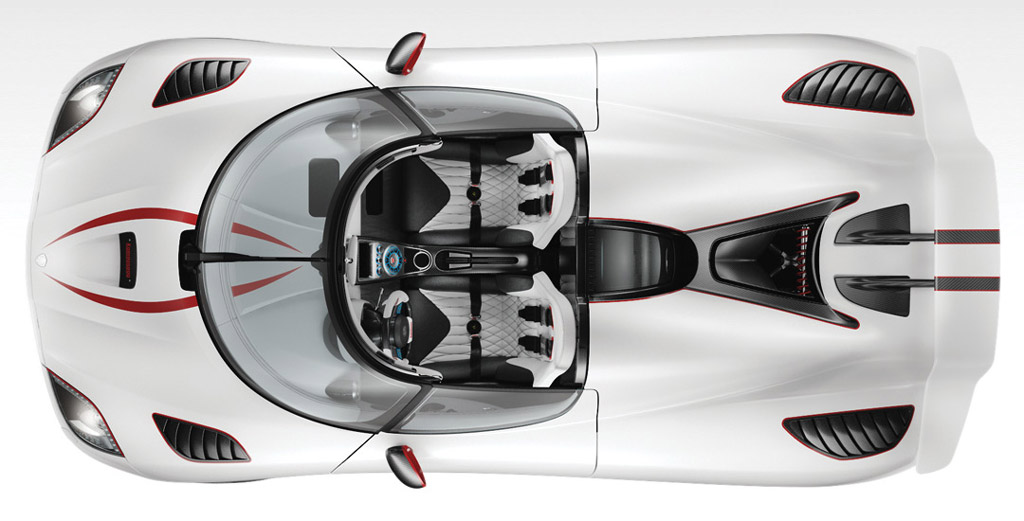
If the beast that powers the Agera R is not enough to make your heart goes racing, then surely its interior and jaw-dropping exterior surely will. Let’s start with the car’s over-all look. The Agera R as shown at the Geneva show reminds one of a cross between the Lotus driven by James Bond as he cruised the Swiss Alps and another movie icon, Speed Racer.
The Agera R is equipped with an intelligently designed and dynamic rear wing. Unlike other wings that lift automatically at high speeds, the Agera R’s wing uses the wind pressure created at high speed to force the wing downward to create wind resistance. Through this, Koenigsegg was able to come up with a smarter and lighter wing that instantly compensates for headwind or tailwind.
Luxury is paramount at the Agera R’s interiors. Satnav, MP3/USB compatibility, climate control, plush leather etc. and more come standard on the Agera R. Quite notable though is its “Top Speed” mode accessible via the infotainment system. Although not a separate key as what is found in the Bugatti, it still provides the driver direct access to unlock the true potential of the Agera R.
You like the Agera R, don’t you? If you have $1.9M to spare, you can have one of the best rides of your life.
Zytech 06 S

Peugeot 908 HDi FAP
 A Peugeot 908 in the 2010 1000 km of Spa with Anthony Davidson on board the #1 car | |
| Category | Le Mans Prototype LMP1 |
|---|---|
| Constructor | Peugeot |
| Designer(s) | Paolo Cantone |
| Technical specifications[1] | |
| Chassis | Carbon fibre monocoque |
| Axle track | 2,000 mm (78.7 in) |
| Wheelbase | 2,950 mm (116.1 in) |
| Engine | Peugeot HDi 5.5 litre V12 twin-turbo, mid-engined, longitudinally mounted |
| Transmission | 6-speed sequential manual |
| Weight | Appr. 930 kg (2,050.3 lb) |
| Fuel | Total Diesel |
| Tyres | Michelin |
Audi R10 TDI
 | |
| Category | Sports car racing - Le Mans Prototype LMP1 |
|---|---|
| Constructor | Audi AG (with Dallara) |
| Predecessor | Audi R8 (race car) |
| Successor | Audi R15 TDI |
| Technical specifications | |
| Chassis | Carbon fibre monocoque |
| Suspension (front) | Double wishbone, torsion bar with separate damper, anti-roll bar |
| Suspension (rear) | Double wishbone, torsion bar with separate damper, anti-roll bar |
| Length | 4650 mm |
| Width | 2000 mm |
| Height | 1030 mm |
| Wheelbase | 2,980 mm (117.3 in) |
| Engine | Audi 5.5 litre V12 TDI DPF twin-turbo, mid-engined, longitudinally mounted |
| Transmission | 5-speed S-tronic[1] |
| Fuel | Shell V-Power Diesel |
| Tyres | Michelin |
Saturday, November 5, 2011
Locus Plethore

Subscribe to:
Posts (Atom)


 Posts
Posts